Jakub Sadowski

Portfolio 2026

· vcc.earth · Gdańsk, Poland

Artist Statement

Cheap electronics are everywhere now, made in vast numbers by the same factories and processes. I use those same pipelines, but slowly: every circuit board I design is routed with the attention usually reserved for a drawing. I think of the finished objects as something like my offspring, things I’m responsible for and proud of.

Working this way, I keep noticing that strict rules produce organic results. Copper traces that follow spacing and routing constraints grow into patterns that resemble microbial colonies or networks of blood vessels.

I design the forms around the circuits myself, modelling the housings in 3D. Here I draw on Bauhaus and Brutalist design: reduced geometric volumes, raw surfaces, and an honest use of materials. Sometimes a calm, simple shell holds a dense circuit inside; sometimes the circuit board itself becomes the visible structure.

My objects are built around microcontrollers, often wireless, and respond to people through light, sound and small screens. I want them to be met not as gadgets but as companions: technology that was clearly cared for, and that invites care in return.

I do not want to keep the technology to myself. My designs are open source, and I hope to inspire both artists and technology enthusiasts to collaborate and explore the possibilities electronics in art can grant.

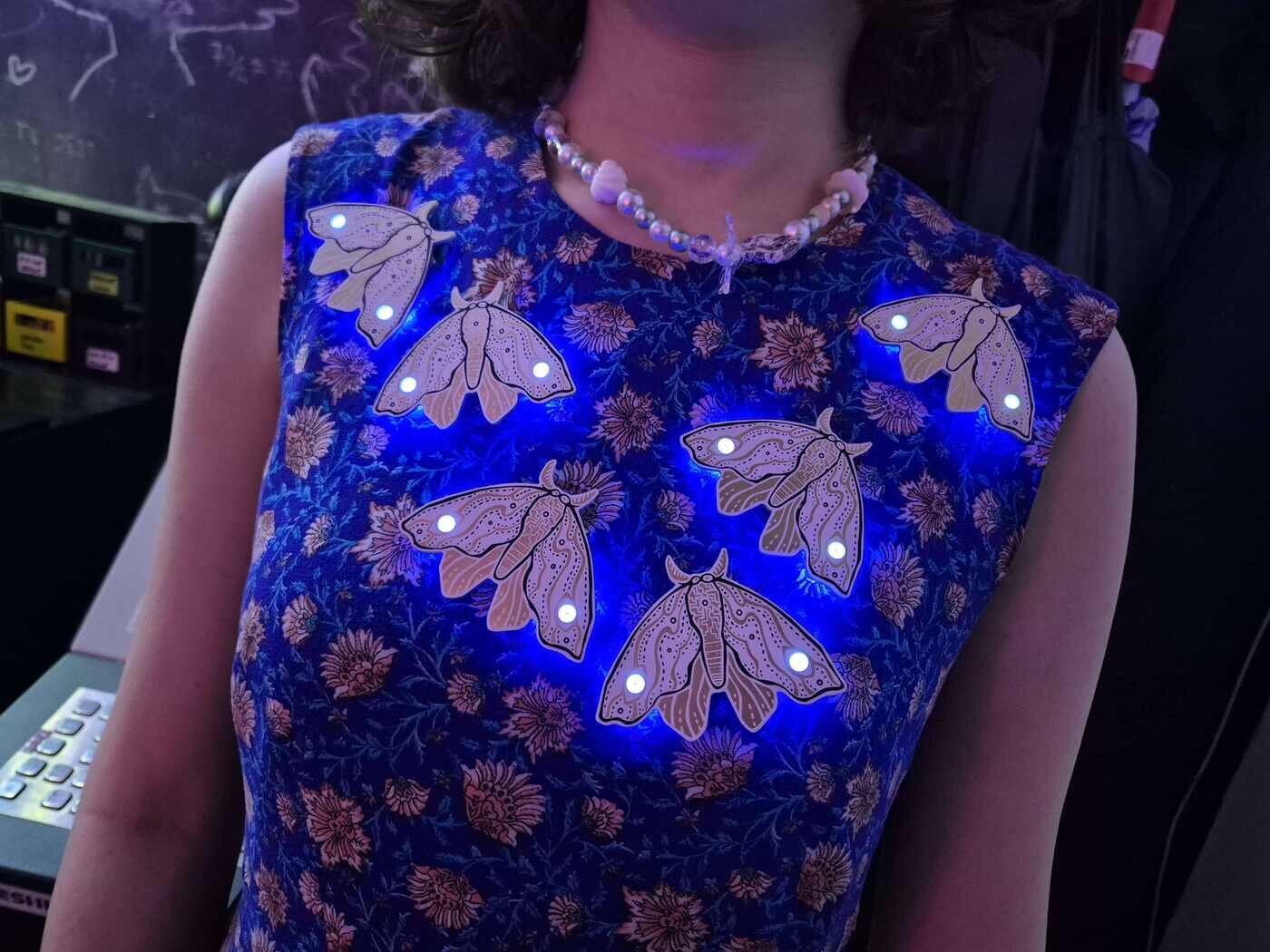
Rough Rat — image 1
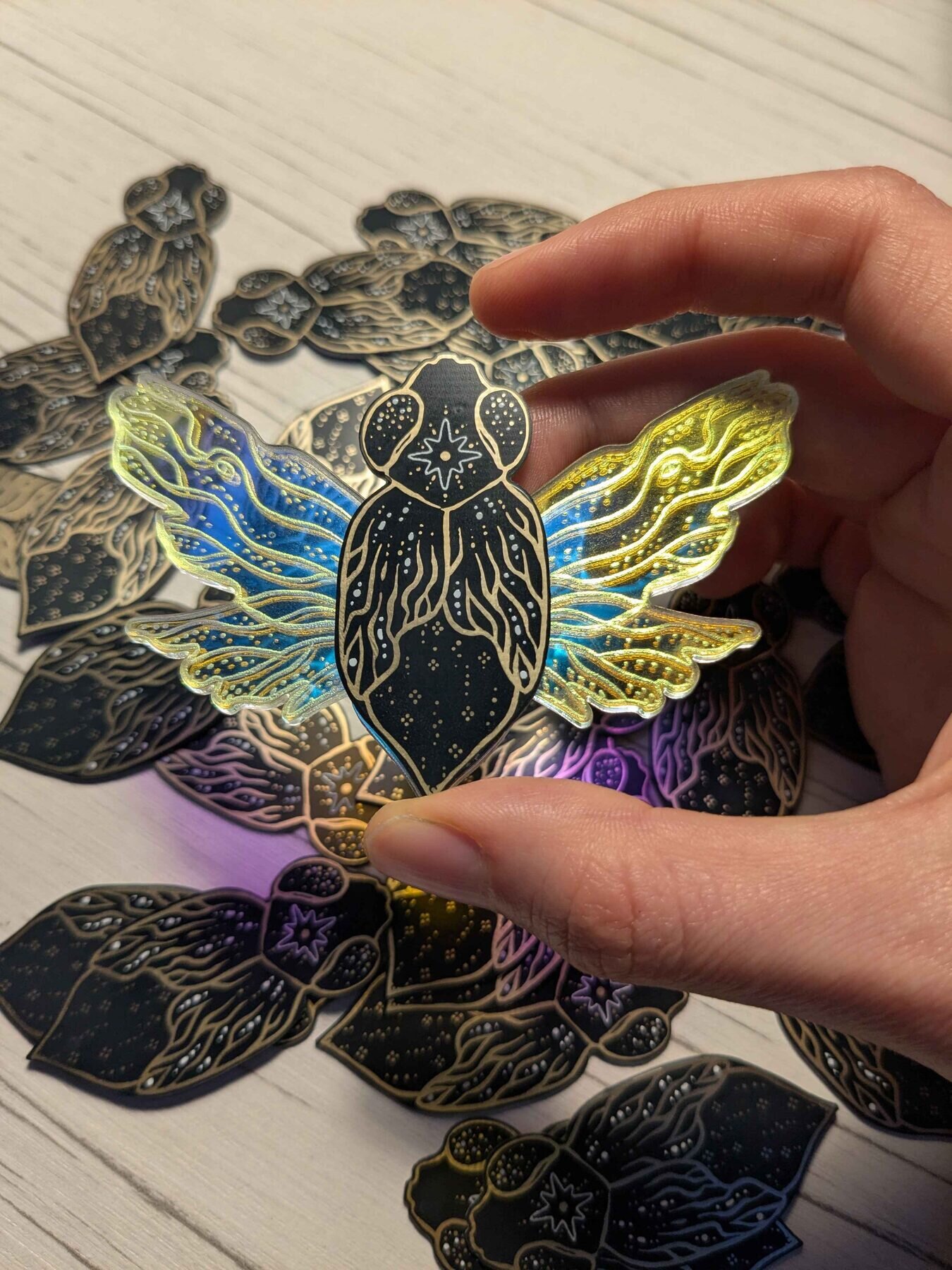
Rough Rat — image 2
Rough Rat — image 3

Rough Rat

2023
Printed circuit board, electronics, code
roughrat.com

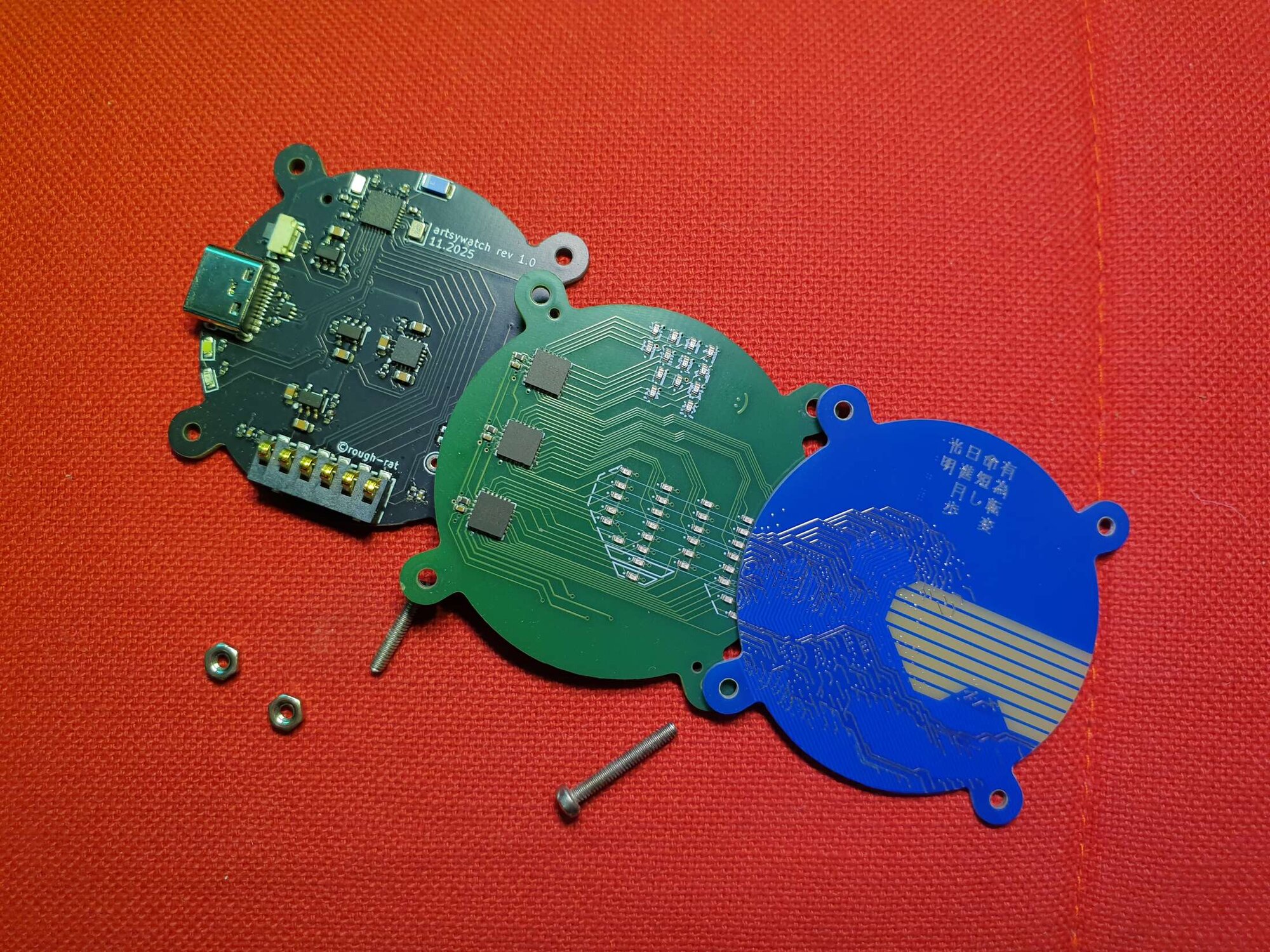
Rough Rat is an electronics and art collective founded by electronics engineer Jakub Sadowski and artist Weasel. We make small objects where the circuit board is both the artwork and the machine: illustrated badges, wearables and light pieces in which copper, solder mask and gold plating serve as drawing materials, and LEDs, microcontrollers and firmware bring the drawings to life.

Our work sits between hacker culture and visual art. We use cheap mass-produced components and industrial PCB manufacturing to create small editions that anyone can wear, hack or rebuild, with designs published as open hardware. Over three consecutive Chaos Communication Congresses, our pieces have circulated hand to hand among the community.

We are interested in what happens when industrial processes built for millions of identical units are turned toward the handmade, the playful and the strange.
Works with Ksawery Komputery — image 1
Works with Ksawery Komputery — image 2
Works with Ksawery Komputery — image 3

Works with Ksawery Komputery

2023–2026
Electronics, generative design
ksawerykomputery.com

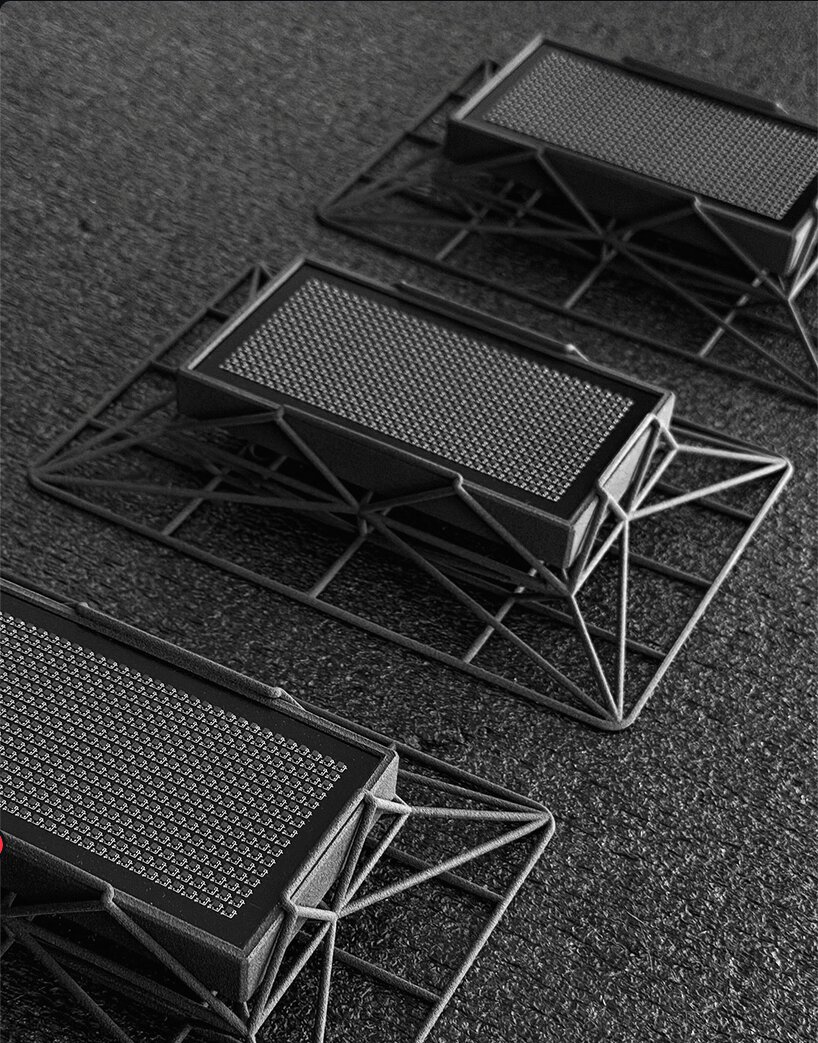
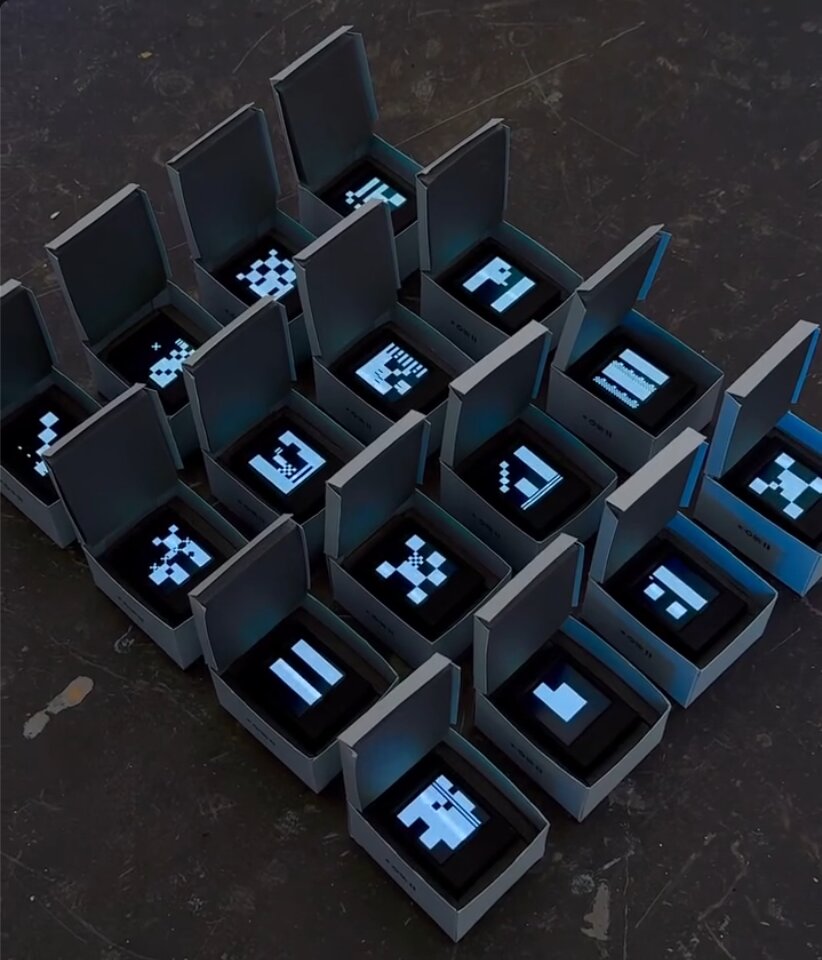
Since 2023 I have worked with Ksawery Komputery’s new media studio, bringing its generative visual language into physical electronics. It began with a redesign of the studio’s LED driver hardware, now used in its installations, and grew into co-developing a series of collectible objects.

SQRT (2024, bottom left) is a battery-powered collectible trinket. During prototyping I added a buzzer, giving the object a voice; it stayed in the final design.

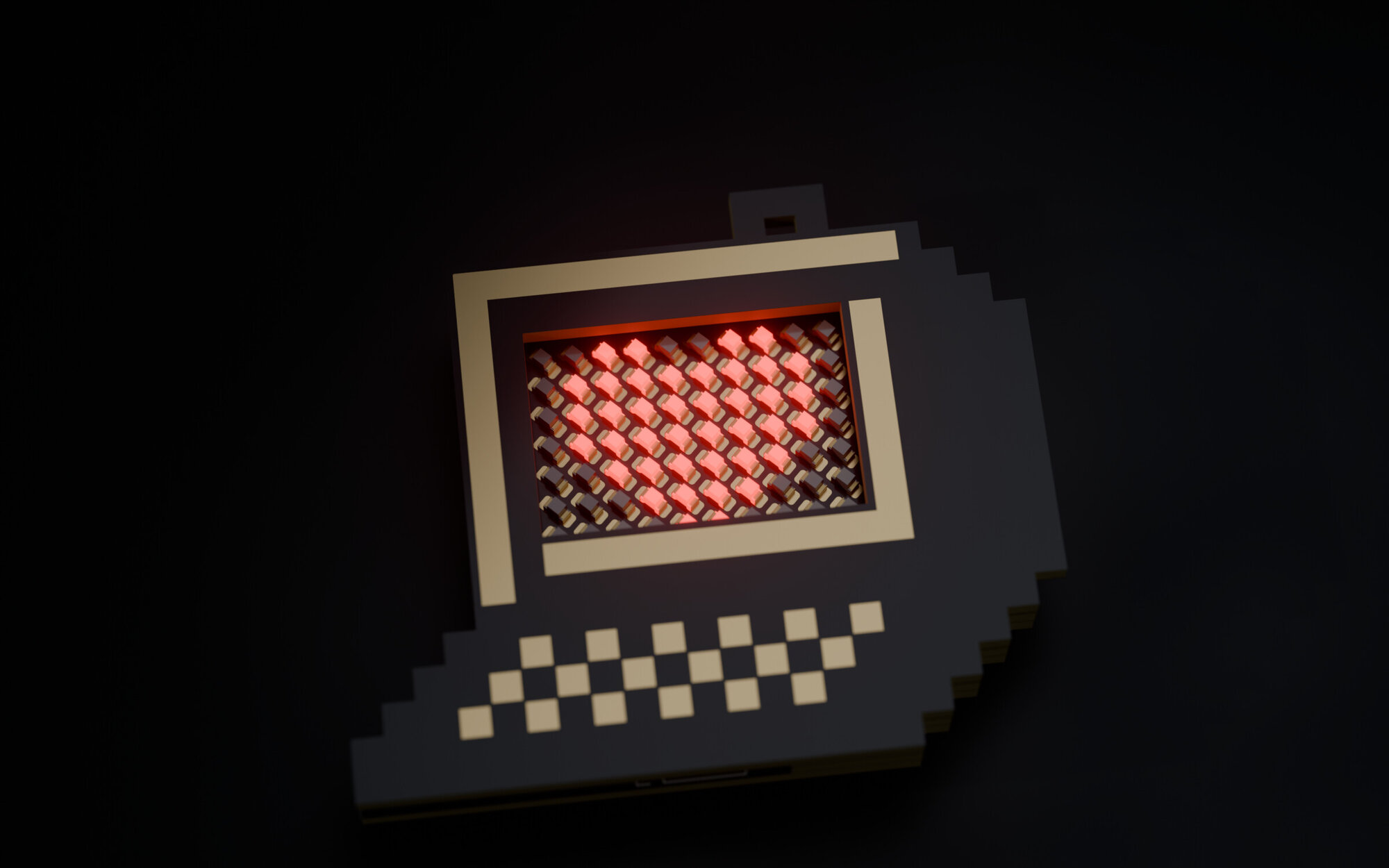
Interphase Chip (2026, top) is an LED badge growing out of my own experiments with LED matrices, resulting in a dense, almost textile-like grid of light.

XVY_badge (2026, bottom right) is a coin-cell trinket with a small LED matrix and a touch-sensitive “keyboard”. Its form is built from stacked PCBs, with the circuit board itself as the sculptural material, taking inspiration from my works in Rough Rat collective.

LED badge research — image 1
LED badge research — image 2
LED badge research — image 3

LED badge research

2022–2026
Electronics, 3D print

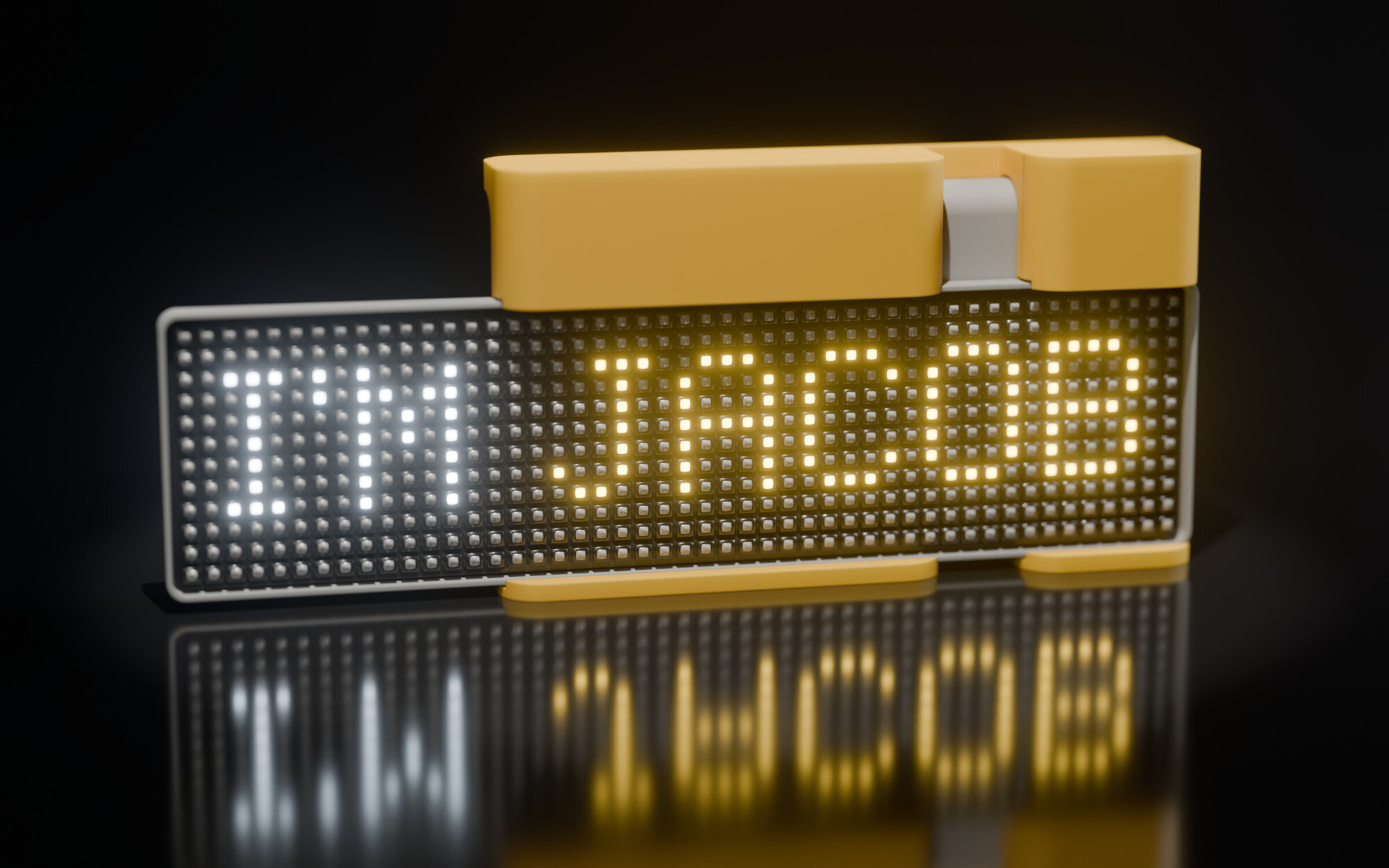
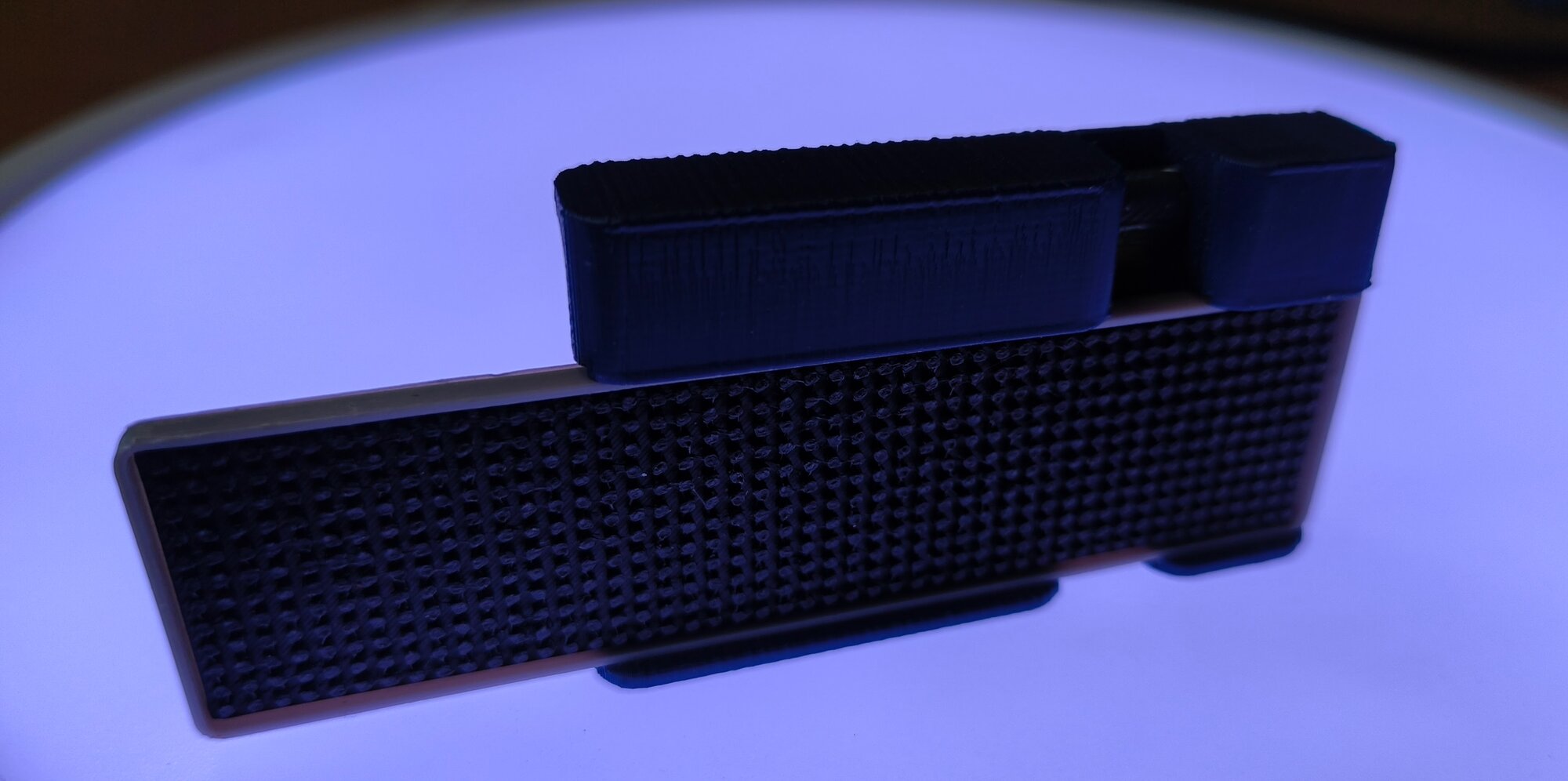
A heavy, concrete-like frame casts a shadow over a thin, sheet-like field of light. The form comes from a photograph of a Brutalist advertising post; to imitate concrete block putting a shadow over the thin, almost fragile led matrix area.

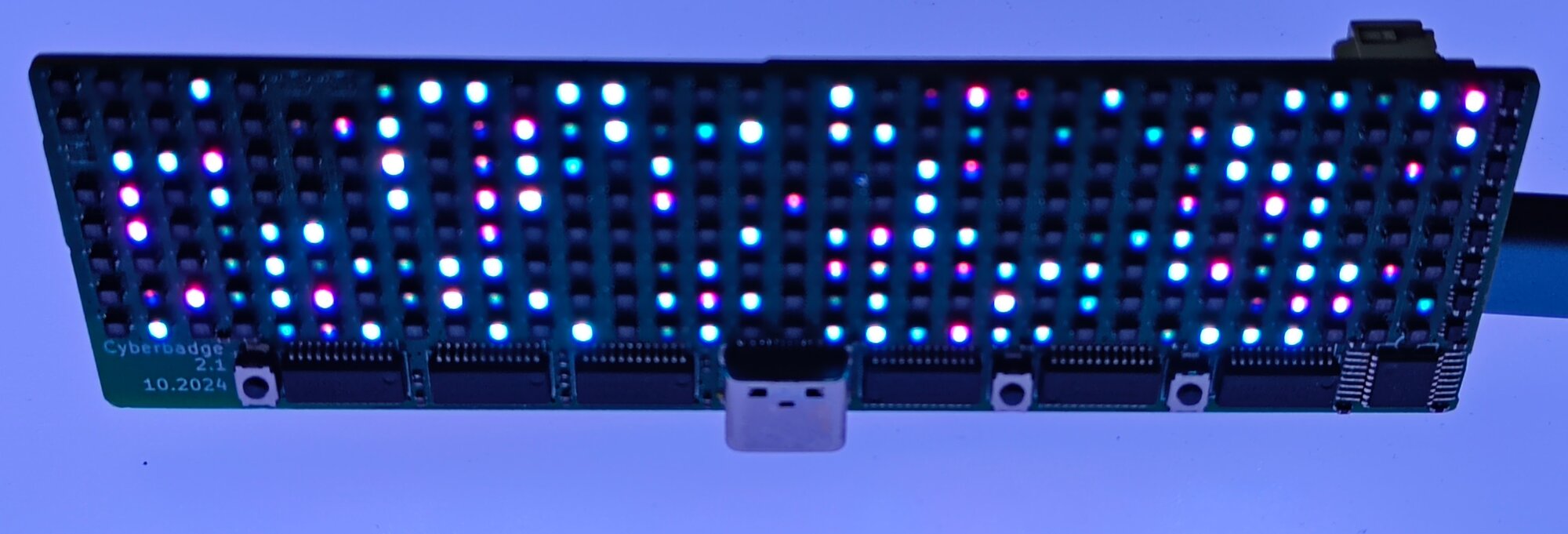
The badge grew out of a long collaboration with my friend Bogdan. Since 2022 we have taken it from an Arduino prototype to a full-colour RGB LED matrix, with a phone app that lets the wearer write any text or draw directly on the matrix with a finger.

It is my protest against devices available on the market, defined by simple rectangular shapes, convenient yet soulless.

Led matrix back for CMF phone 2 — image 1

Led matrix back for CMF phone 2

2026
Custom PCB, LED matrix, firmware

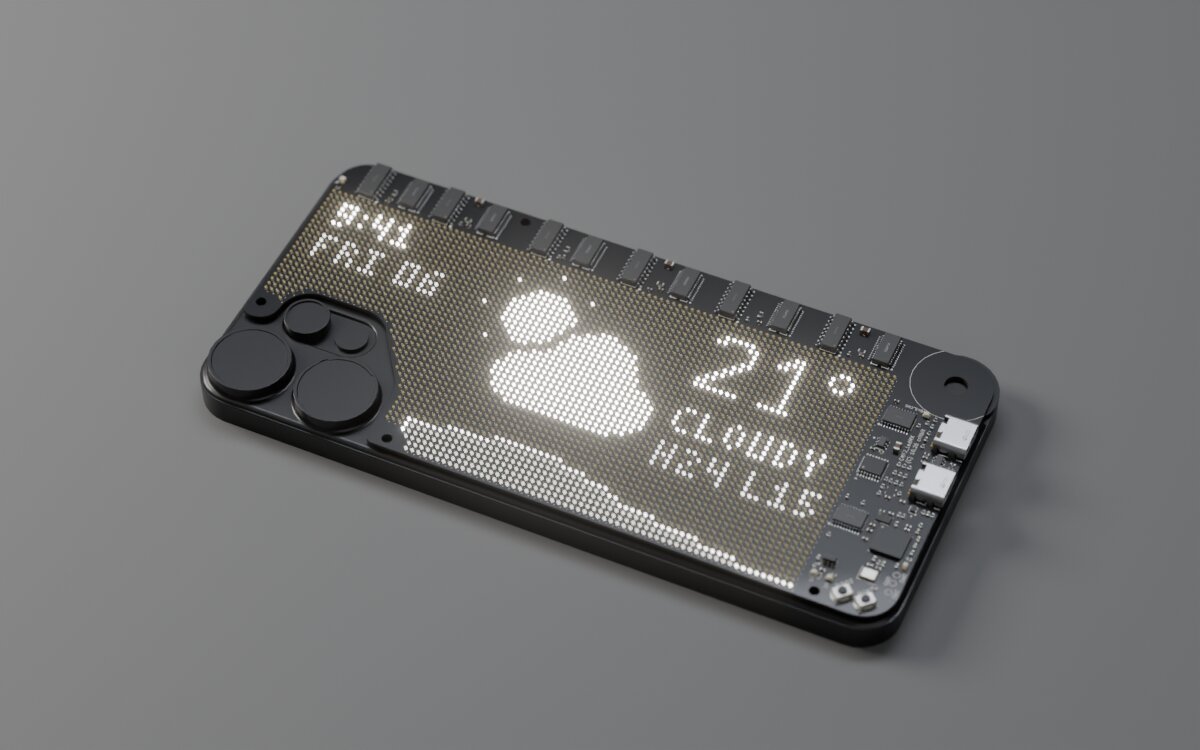
Smartphones have become nearly identical black rectangles. Nothing’s CMF Phone 2 is a rare exception: its back shows screws and playful accents, and the company publishes the dimension drawings so owners can design their own add-ons.

I took that invitation seriously. This replacement back carries a custom LED matrix, designed to fit Nothing’s design language so closely that it could pass for an official part. Because I design the matrix board myself, the LEDs don’t have to fill a plain rectangle; the grid can follow the phone’s own shapes.

The result turns a mass-produced device into a one-off object that shows the time, the weather, or whatever its owner wants. The first boards are currently in production; the image shows a render.

Cyberlamp — image 1
Cyberlamp — image 2

Cyberlamp

2026
3D print, bent metal, electronics, code
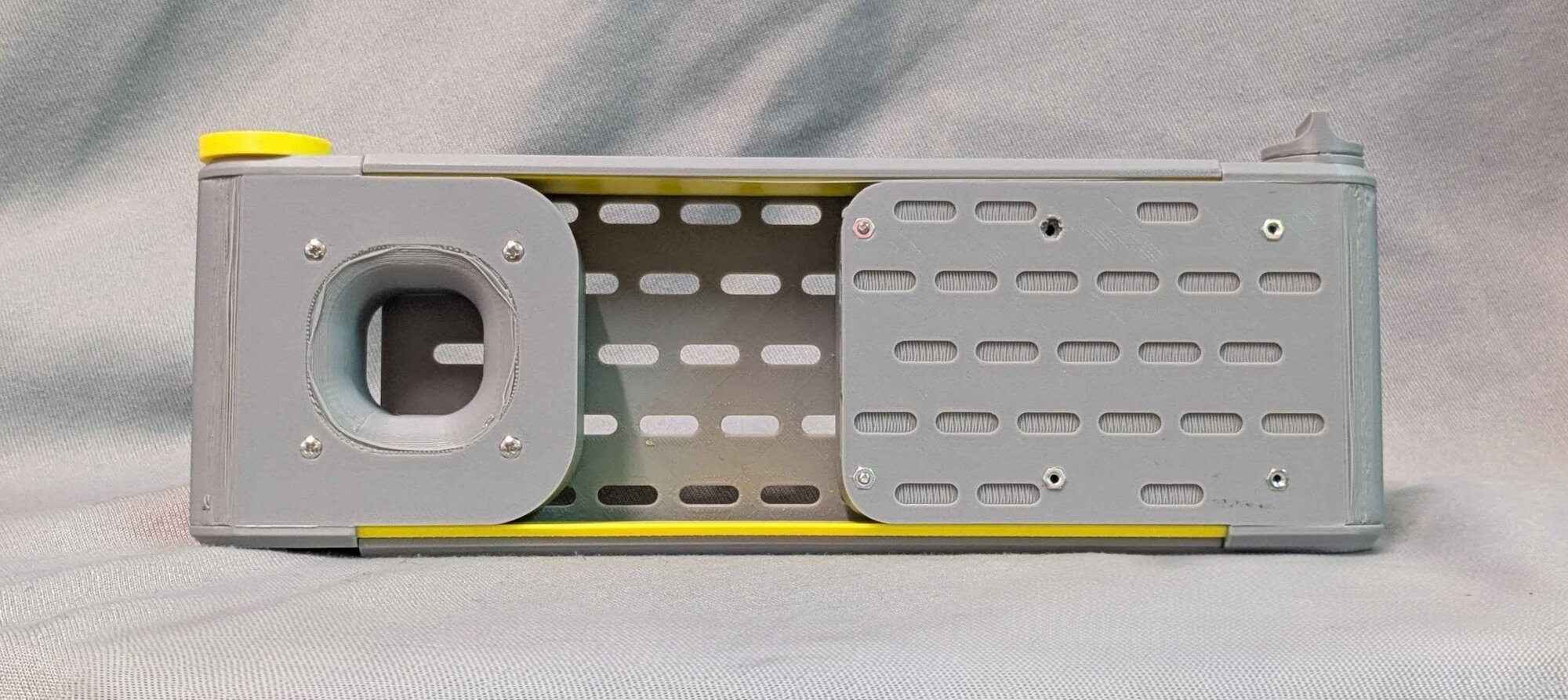
255 x 80 x 30mm (folded)

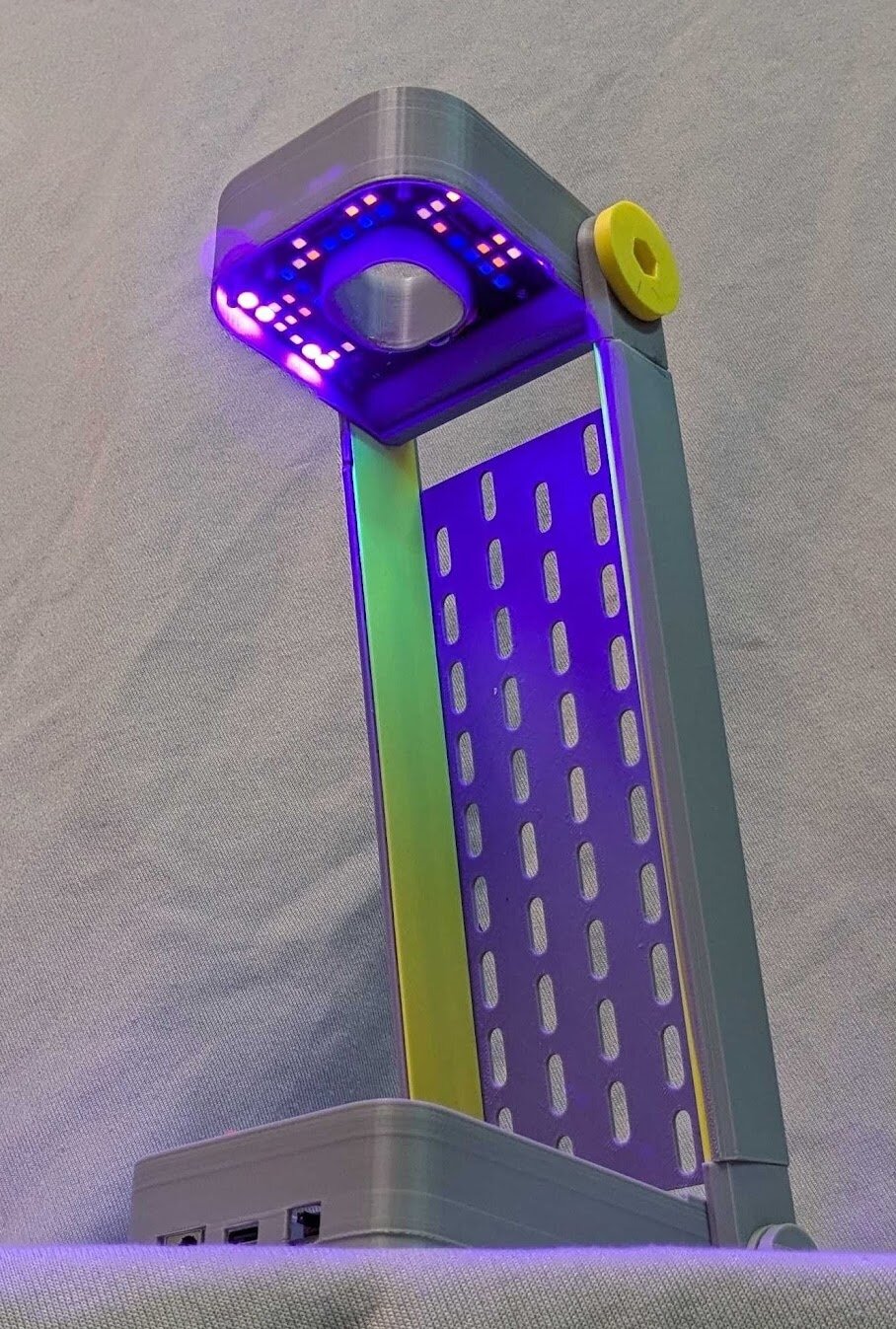
Indoor light is incomplete. Cyberlamp tries to bring the missing part of sunlight back inside: besides adjustable warm and cool white, it emits infrared and ultraviolet, wavelengths that ordinary interior lighting leaves out.

The wavelenghts we removed by moving to modern LED bulbs are considered to be exactly what we need for physical and mental health, so I added them back.

Its form comes from my interest in industrial design. Inspired by the Hello Image exhibition at MK&G Hamburg, I built it from bent, perforated sheet metal and 3D-printed parts: sturdy, reduced, and foldable flat for transport.

I wanted an object that moves between tool and artwork: a desk lamp, a light for soldering workshops, or one element of an installation. Several are being designed to connect into a wireless mesh and act together as a single light piece. When unfolded fully, the lamp may act as art exhibition spotlight.

Bio & CV

Bio

Jakub Sadowski is an electronics engineer and artist based in Gdańsk, Poland. Since 2020 he has designed more than 100 circuit boards, from industrial devices to wearable light objects, and co-founded the art collective Rough Rat with artist Weasel. His work explores mass-produced components as artistic material, especially LED matrices, where industrial economies of scale meet the geometry of light. He is an active member of Hackerspace Pomerania and has collaborated with the design studio ksawerykomputery.

Contact


vcc.earth

Talks & Publications

2025Cyberbadge - conieco o matrycach LED, Cebulacamp, Wrocław

Education

2014–2018B.Sc., Warsaw University of Technology, Warsaw